This lesson describes adaptations that belong with a qualified hoofcare provider, farrier or certified boot fitter. It reflects the advanced approach developed by registered farriers who specialise in hoof boots. The goal is to show what is possible – not a do-it-yourself manual.
Scoot Boots in rehabilitation
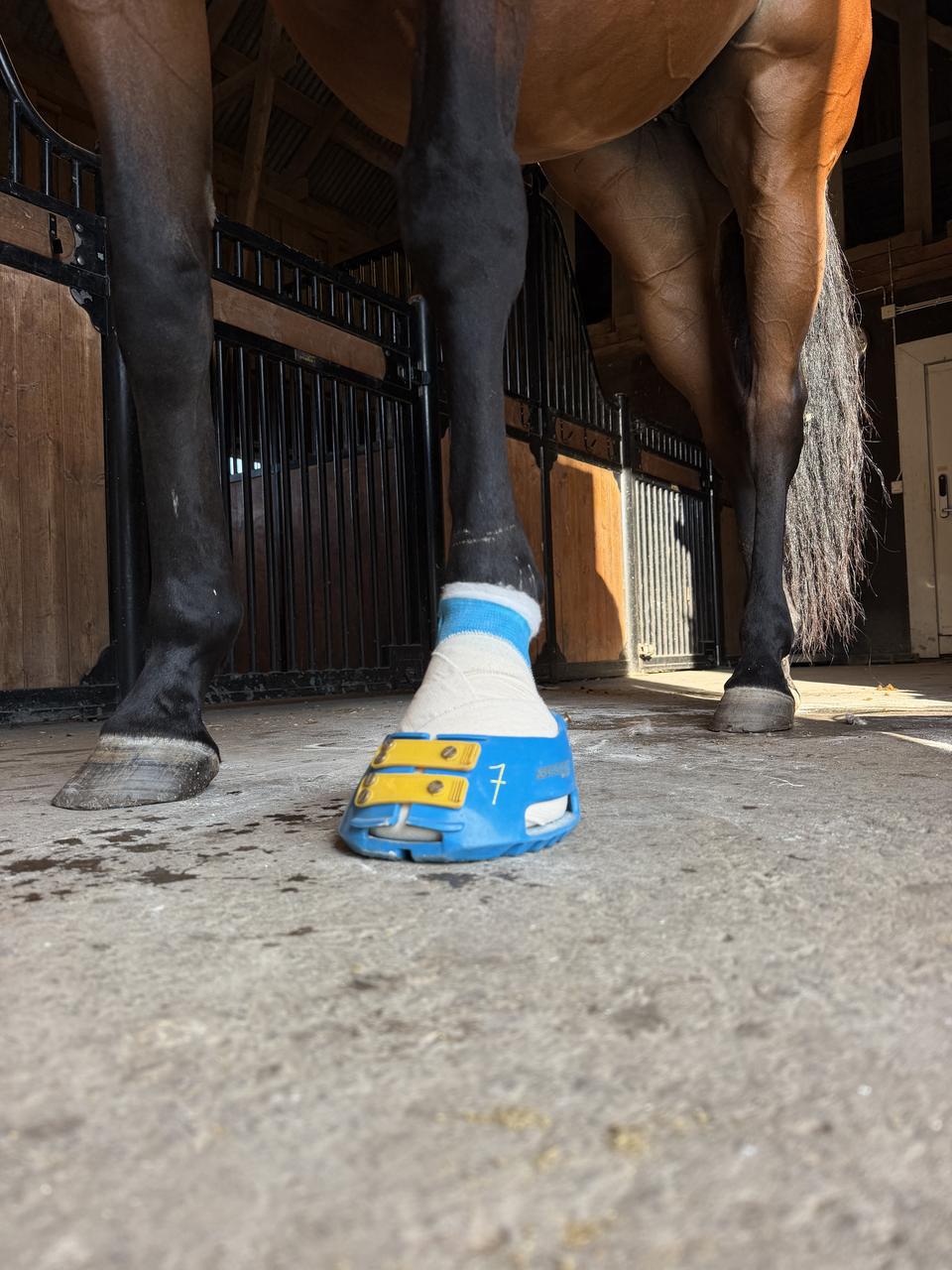
Boots over hoof casts. Uddens Sjögård uses the Scootboot Classic extensively across all hoof rehabilitation – for thin soles, opened and cast hoof abscesses, treatment of thrush, and to strengthen the internal structures of the hoof.
The boot works as an outer shell over the cast: it protects the dressing, holds it in place and lets the horse move during healing. Controlled movement is itself part of rehabilitation, since loading stimulates the internal structures of the hoof.
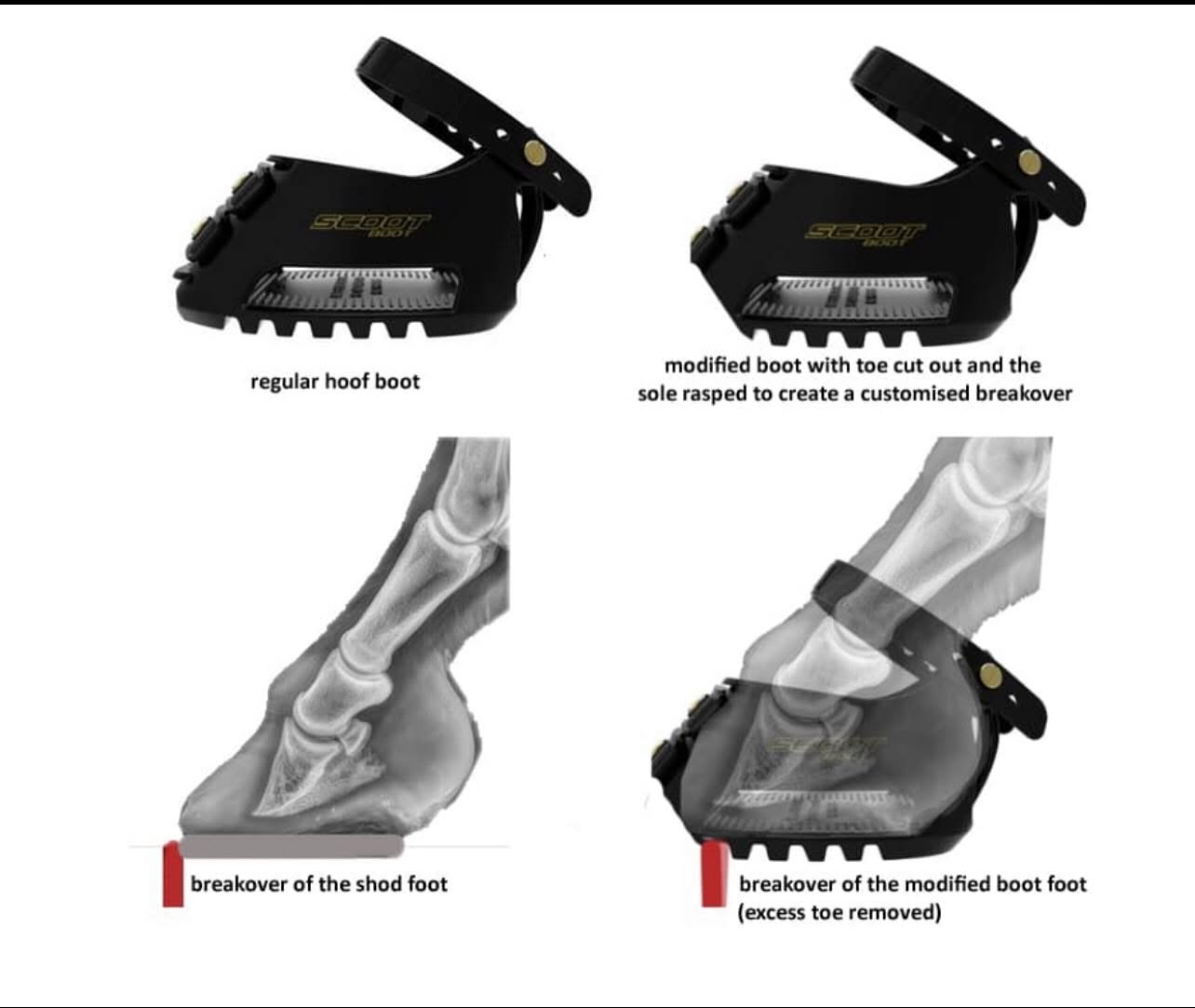
Club foot and a cut toe section. The image shows a modified Scootboot Classic where the toe section has been cut away to optimise break-over. This is an adaptation that belongs in rehabilitation, where that particular function can play a decisive role in recovery – for example with a club foot.
Every hoof is unique, and we believe in individual adaptation to give the horse the best possible support and comfort throughout the rehabilitation process.
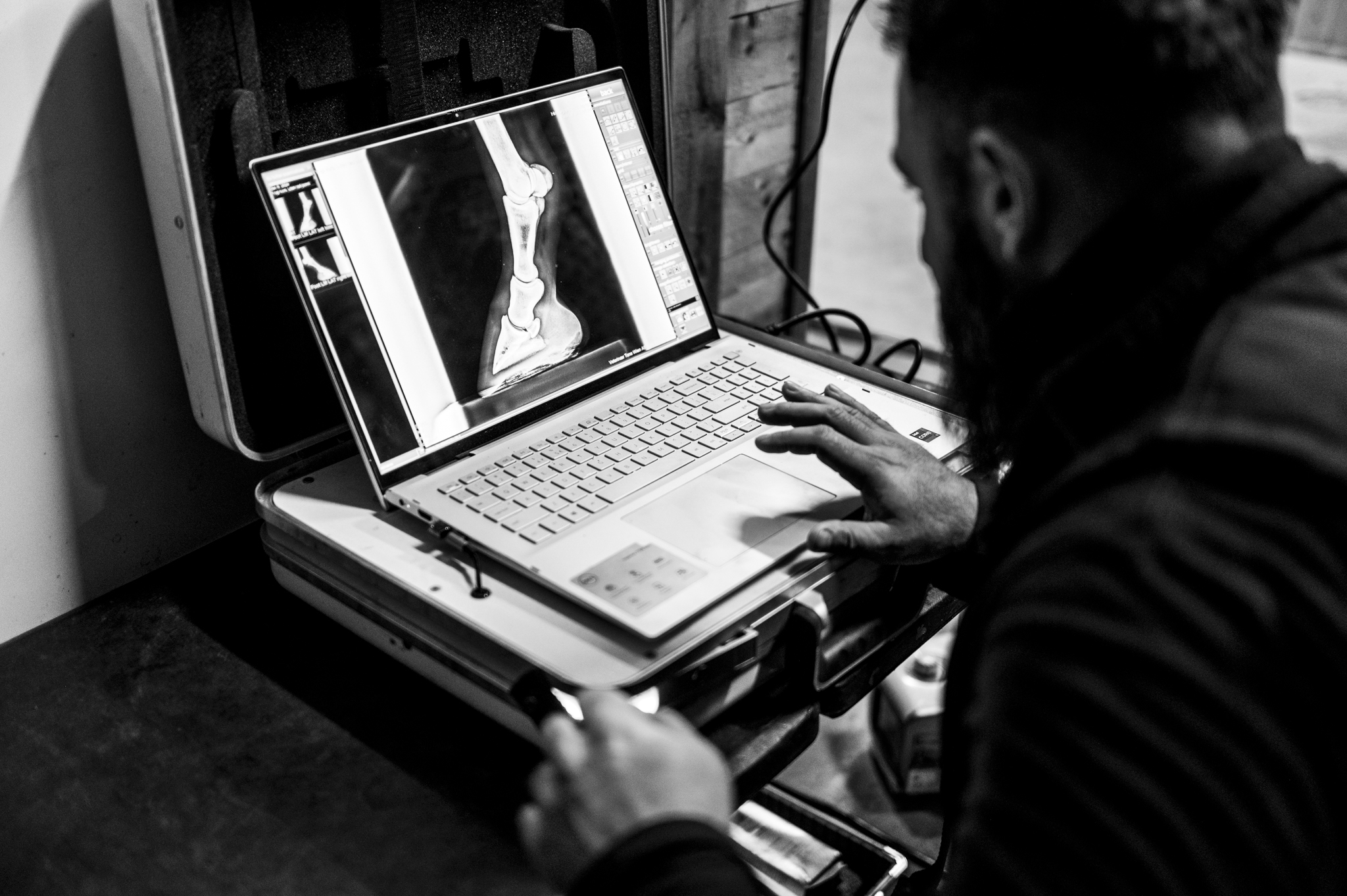
The health team is decisive. Adaptations of this kind should never be made in isolation. Good dialogue between owner, vet, hoof care professional and rehabilitation staff is the precondition for giving the horse the best possible conditions. Everyone needs to know what the others are doing, and why.
Sole protection for thin and sensitive soles. For horses with thin or extremely sensitive soles, EQUNIQUE manufactures the Support Pad – a Swedish-made, specially designed sole developed together with farriers. It suits sore to very sore soles and encourages heel-first landing, which in turn gives correct stimulation of the heel and the internal structures of the hoof, and reduces muscular tension in the body.
Break-over. If you do nothing else in the optimising process, create break-over in the right place for the individual horse. It is the single most important element in making the boot move with the horse.
Heat welding. The boot’s TPU material can be heat welded. If the heel bulbs sit low but the boot sits high, a section can be removed and welded back together; an awkward flare can be handled with pleats in the boot sides so they conform snugly.
Internal support pads. Caudal support pads give comfort, stimulation and help joint alignment. They can be extended into frog support or frog stimulation, or made therapeutic. Collateral-groove pads give dedicated support beneath the densest part of the pedal bone and at the same time resist twisting.
External pads. The boot can take an external pad as a short-term orthotic, and grip can be added to the pad where slipping is a concern.
Building up for balance. Building up material to correct balance and fit on an unbalanced hoof is farrier-level work. Building up wall or structure must be done by a qualified professional – done wrongly it can do more harm than good.
Remember: every change must relate to the end product – the horse’s comfort and function as it moves. And any modification of the boot voids the manufacturer’s warranty.