Few things scare a horse owner like a horse that is suddenly severely lame — and a hoof abscess is the most common explanation. The good news: with the right knowledge, abscesses are usually manageable, and with good routines many can be prevented.
What is a hoof abscess?
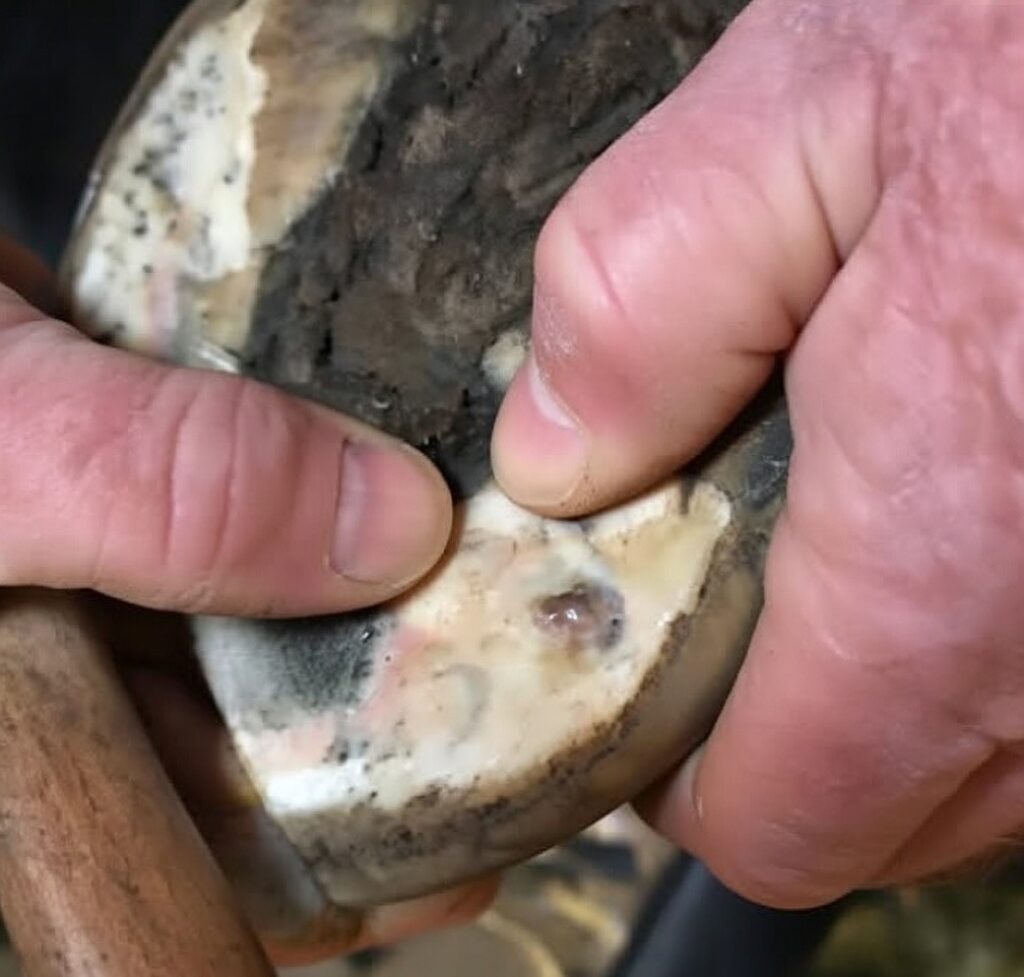
A hoof abscess is a pocket of pus that forms inside the hoof, usually after dirt or moisture has entered through a crack, a nail channel or the white line. The pressure inside the hard hoof capsule is very painful — which is why the lameness often appears suddenly and can look dramatic, even though the cause is local.
How to recognise it
Typical signs are sudden, often severe lameness on one leg, heat in the hoof, a palpable digital pulse at the fetlock, and a clear reaction to hoof testers over a defined area. Sometimes the fetlock or leg swells slightly. The rapid onset separates an abscess from many other hoof problems.
What do you do?
Contact your farrier or veterinarian — an abscess should be located and opened by a professional so the pus can drain under controlled conditions. Do not dig yourself. Until the visit: keep the horse on dry, soft ground and at rest. Once the abscess drains, relief usually comes quickly, and aftercare is about keeping the area clean and dry according to your farrier’s or vet’s instructions.
Preventive routines
1. Daily hoof picking — find stones, cracks and foreign objects early.
2. Dry ground — cycling between wet and dry makes horn more brittle; drain muddy zones.
3. Regular trimming — a well-shaped hoof with a tight white line lets less in.
4. Strengthen the hoof from within — balanced mineral supply supports normal horn quality.
5. Know your horse — check the digital pulse now and then when all is well, so you recognise the difference the day something is wrong.
Everyday hoof care
In our hoof care range you will find routine products for a strong, dry and resilient hoof all year round.
This guide is general knowledge and does not replace your farrier’s or veterinarian’s assessment of your horse.